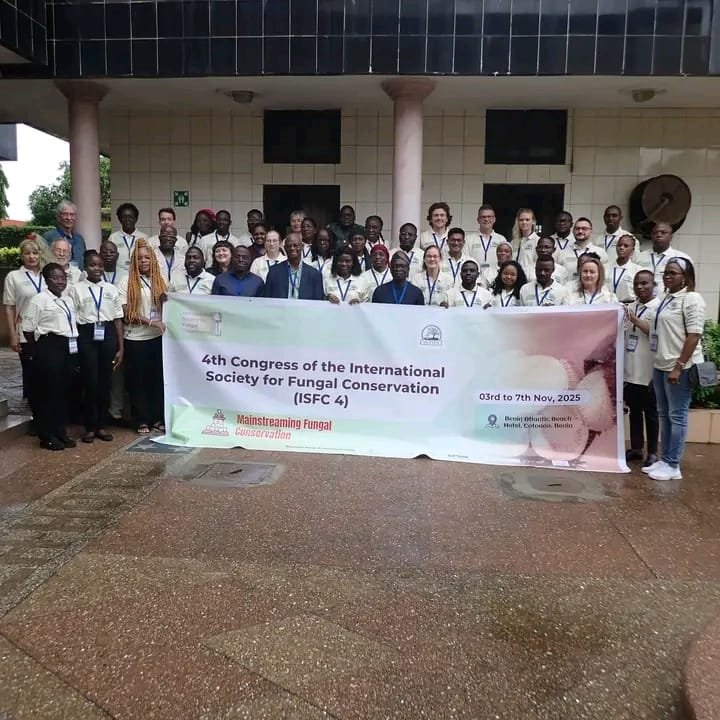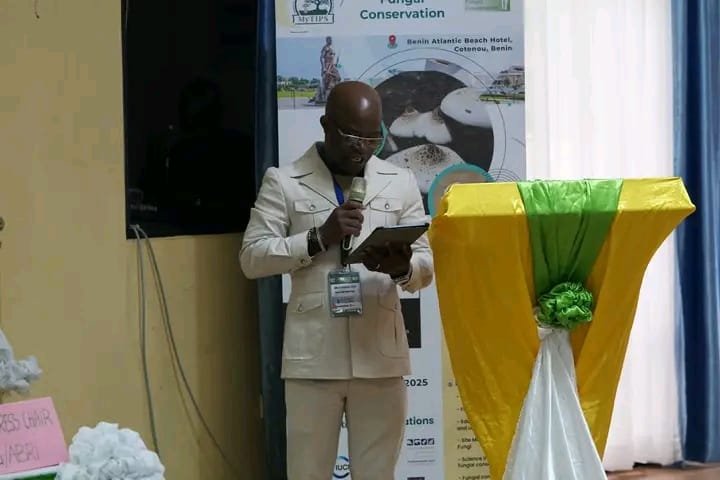
From November 3 to 7, 2025, some members of the NGO IPFAT-ONG participated in the 4th Congress of the International Society for Fungal Conservation (ISFC4), held in Cotonou, Benin. This major scientific event, organized for the first time on the African continent, marked a historic turning point in the global recognition of fungi as essential components of biodiversity.
The congress brought together more than 80 participants from over 30 countries, including researchers, IUCN experts, and policy makers. All shared their work, exchanged experiences, and discussed strategies to integrate fungi into national and international conservation policies. The central theme, “Mainstreaming Fungal Conservation into Environmental Policies,” strongly resonated in the African context, where fungal diversity is both rich and under threat.
IPFAT-ONG members actively participated in the congress, notably through the following workshops:
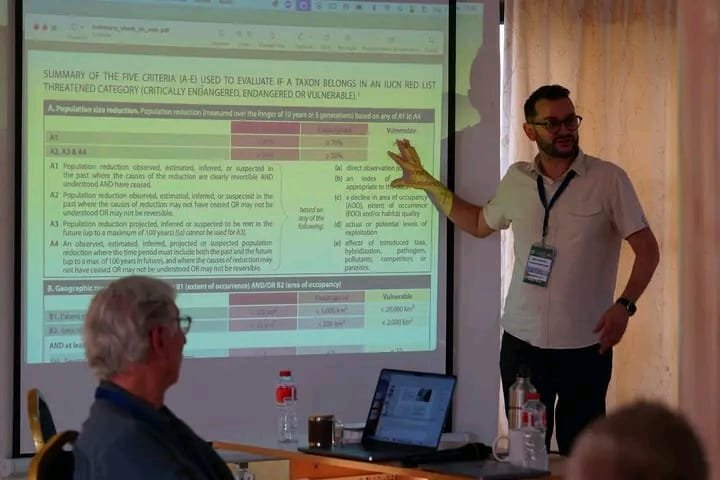
- Red-listing Termitomyces species: assessing the extinction risk of Africa’s Termitomyces mushrooms. Led by Greg Mueller [IUCN] & Ricardo Drechsler Santos [Brazil, IUCN];
- Red-listing Meliola species: producing draft red list assessments by computer. Led by David Minter [UK, Cybertruffle];
- GROW Workshop: Gender, Rights and Opportunities for Women – through fungi. Led by Elizabeth Barron [Norway, IUCN].
These workshops provided a valuable opportunity to acquire practical skills in applying IUCN Red List criteria, which are directly relevant to our research on edible fungi and mycorrhizal symbioses in Sudanian woodlands in Benin.
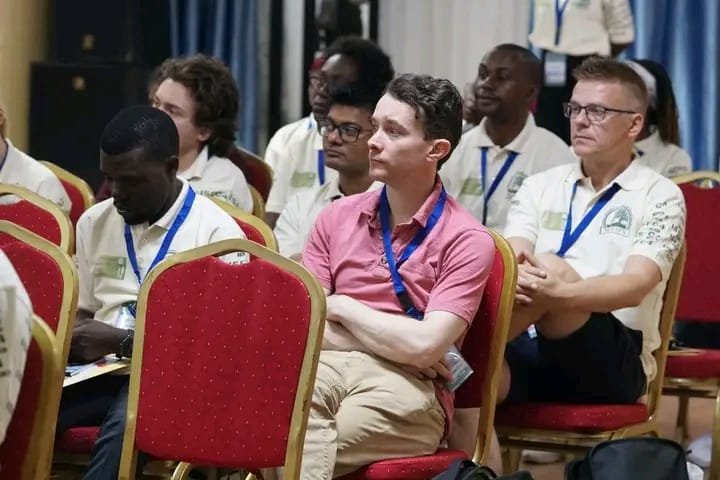
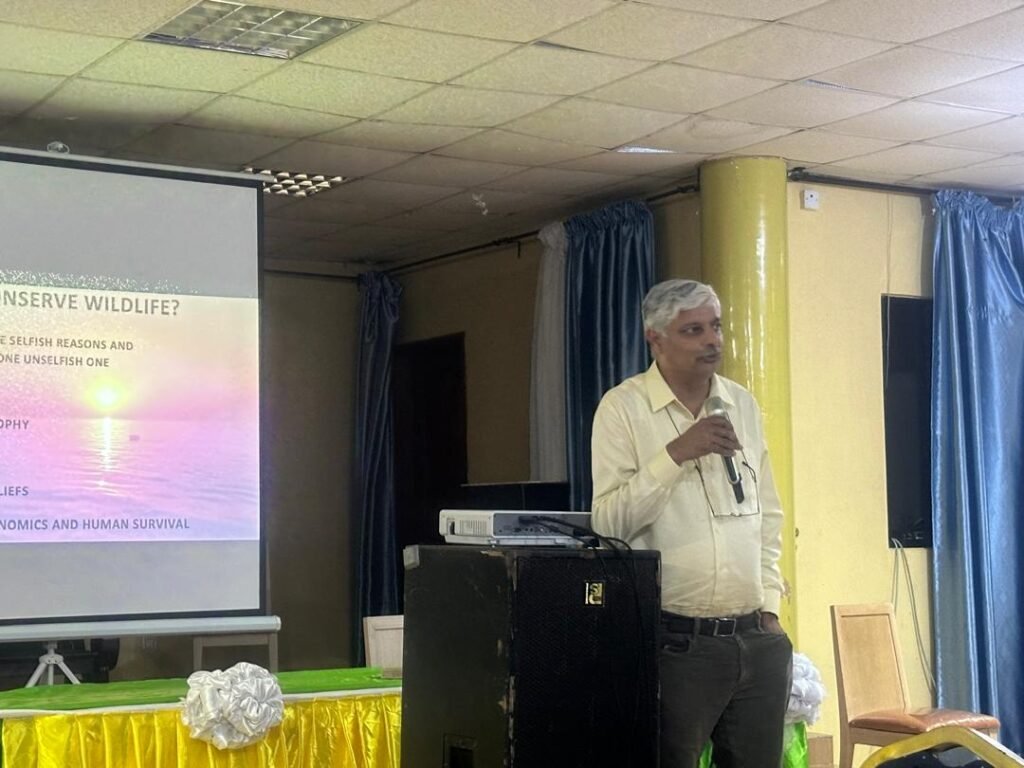
In addition, our members attended rich and inspiring plenary sessions, covering topics such as citizen science, gender equity in mycology, sustainable uses of fungi, fungal databases, and funding strategies for conservation. These exchanges helped strengthen our knowledge, expand our network, and deepen our understanding of the international challenges surrounding fungal conservation.
IPFAT-ONG’s participation in this congress reinforced our commitment to promoting fungal conservation in Africa through research, awareness-raising, and advocacy. We return from Cotonou with deeper knowledge, practical tools, and a renewed determination to make the voice of fungi heard in biodiversity policies. This congress was a decisive step for our organization, and we are already looking forward to the next edition with enthusiasm and purpose.
ISFC4 #Mycology #FungalConservation #IPFATONG #Biodiversity #Africa #Termitomyces #ScienceForNature