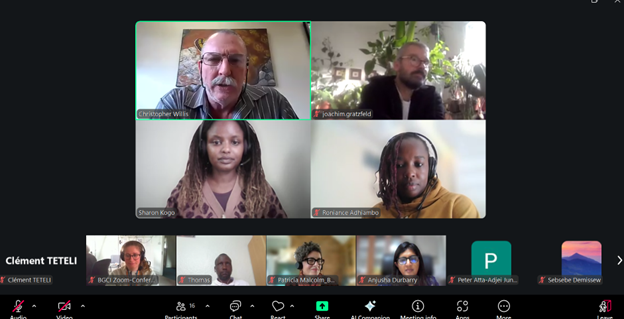
The Initiative for Peoples, Lands and Forests of Africa (IPTFA-ONG) is committed to promoting and safeguarding community-based ecosystems, including sacred forests, school gardens and community gardens, with the long-term goal of integrating them into the national protected areas system. As part of its efforts to strengthen its technical capacity and expand its partners network in plant conservation, IPTFA-ONG participated in the African Botanic Gardens Network (ABGN) Online Meeting on 25 November 2025. The African Botanic Gardens Network (ABGN) convened this virtual coordination meeting to strengthen collaboration among African botanic gardens. The session followed ongoing discussions initiated at the AETFAT Congress in Ghana. Its main objectives were to review the status of ABGN, analyse the current information available on African botanic gardens in BGCI’s GardenSearch database, identify priority technical themes for the 2026 ABGN technical talk series, and outline the next steps for the network’s 2026 action plan.
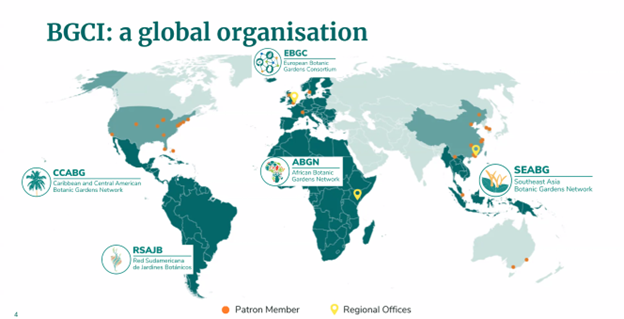
The first presentation, delivered by Roniarce Adhiambo and January Muthoka, provided an overview of Botanic Gardens Conservation International (BGCI) and its work across Africa. The presenters reiterated BGCI’s mission: to mobilise botanic gardens and their partners to secure plant diversity for the well-being of people and the planet. BGCI is a global membership organisation comprising more than 950 institutions worldwide, operating through several regional networks, including ABGN. Current BGCI Africa projects highlighted during the meeting include the Kenya Threatened Trees Consortium, various species recovery initiatives, seed collection and germination trials, genetic studies, and collaborations with forestry agencies, national botanic gardens and community-based nurseries. BGCI Africa’s strategy emphasises governance strengthening, diversification of funding sources, capacity development, and integration of climate, biodiversity and community engagement issues.
The second presentation, led by Sharon Kogo, reviewed the history of ABGN and progress made since the AETFAT meeting. Established in 2002, ABGN aims to support African botanic gardens in biodiversity conservation and sustanable management and plant ressources.
The network’s vision is to position African botanic gardens as key actors in protecting the continent’s botanical, cultural and environmental heritage. Discussions during earlier sessions had highlighted the need to revitalise the network, improve communication among members, strengthen technical capacity and establish a more robust governance structure, including national and sub-regional coordinators. Since AETFAT, progress has been made through updated contact information in SheepCRM, circulation of meeting notes, follow-up with participants and encouragement for gardens to join ABGN and Cultivate platforms. BGCI continues to support these efforts by maintaining databases, sharing updates and providing technical assistance.
The third presentation, given by Patricia Malcolm, focused on updating the information of African botanic gardens in BGCI’s GardenSearch and PlantSearch databases.
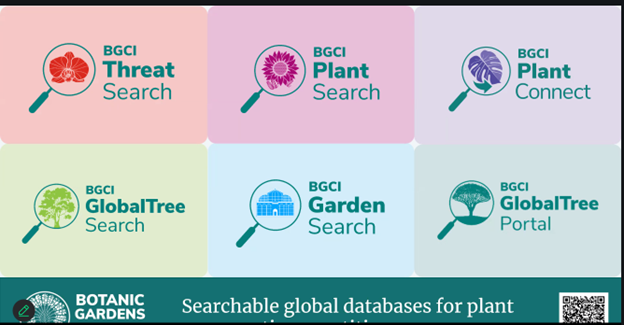
The presentation underlined the scale of BGCI’s global network, which includes more than 3,500 botanical institutions. However, despite 232 African botanic gardens being listed in GardenSearch, only 21 have recently updated their information. This gap reflects the need for greater engagement to improve data quality, facilitate collaboration, enhance international visibility and strengthen strategic planning. In Benin, 7 botanic gardens are registered in GardenSearch, but only one has up-to-date information.
The fourth presentation, delivered by Joachim Gratefled, presented ABGN’s priorities for 2026. These priorities include consolidating and expanding the network, updating institutional data and reinforcing governance structures.
ABGN representatives are encouraged to update their profiles on BGCI and ABGN platforms. A complete mapping of African botanic gardens is also underway to improve coordination across the continent. Key topics for the 2026 technical talk series will be selected based on member contributions and available expertise.
The final presentation focused on the prioritisation of technical themes for ABGN’s 2026 technical talk series. Participants voted on a range of themes, identifying as priorities: nursery and propagation techniques for native plants, development of botanic garden infrastructure, propagation of threatened and indigenous species, conservation horticulture, climate resilience, herbarium digitisation, management of living collections, ex situ conservation, community-managed forest collaboration, youth engagement in conservation, and fungal conservation and identification a theme closely aligned with IPTFA-ONG’s expertise. IPTFA-ONG was represented during the meeting by Ramdan Dramani and Clément Teteli. The organisation’s participation in this continental event represents an important step in strengthening its conservation efforts and positioning community-based initiatives such as sacred forests and school or community gardens within African and international conservation networks. It marks a new phase of collaboration, learning and strategic engagement for the benefit of ecological resilience in Benin.